
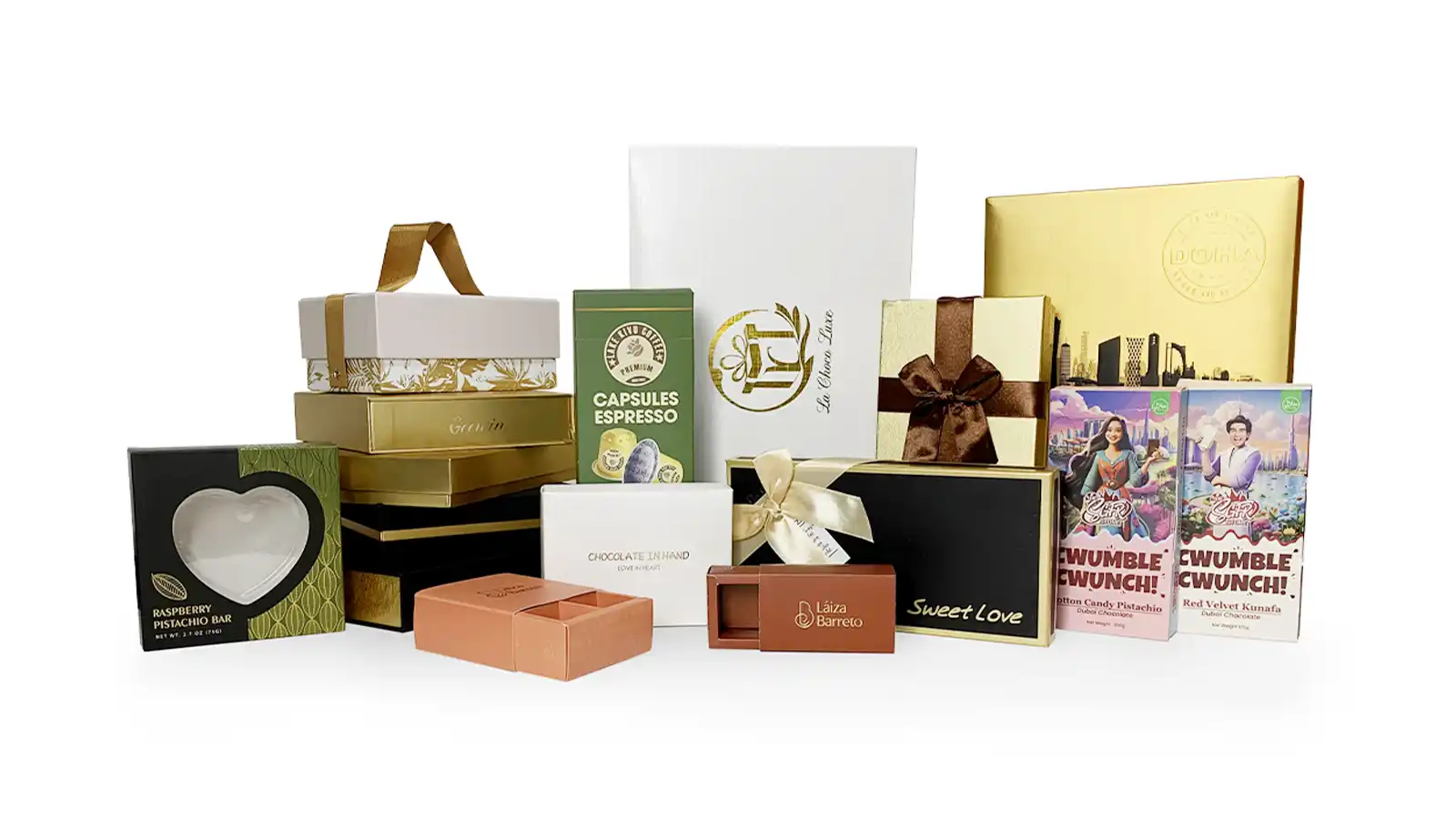
Chocolate paper box packaging can be as simple as a folding carton around a wrapped chocolate bar or as detailed as a rigid gift box with individual compartments, foil branding and a fitted insert.
The best option is not always the most expensive box. It is the box that fits the wrapped chocolate correctly, protects it during handling, works with your packing process and supports the way the product will be sold.
This guide explains the main paper box styles, materials, inserts, printing options and production decisions so that you can choose a practical solution for your chocolate product.
Explore our full range of custom chocolate packaging options for bars, truffles, pralines, gift sets, retail displays and e-commerce delivery.
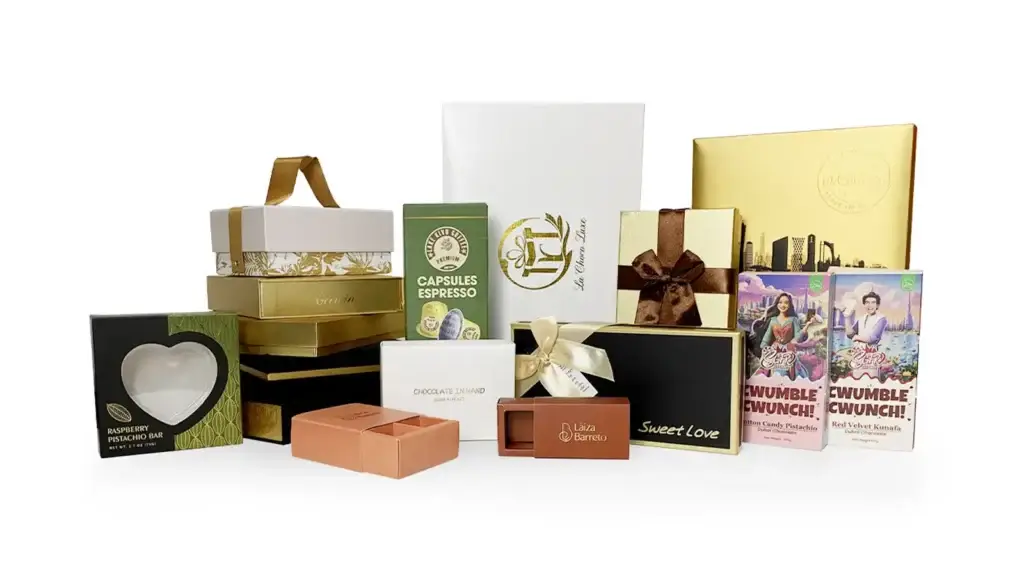
Quick Guide: Which Chocolate Paper Box Should You Choose?
For most projects, the product format and sales channel will quickly narrow down the available options.
- Single wrapped chocolate bars: folding carton, sleeve or tuck-end box
- Bonbons, pralines and truffles: drawer box or lid-and-base box with an insert
- Premium gift collections: rigid lid-and-base or magnetic closure box
- Retail counter sales: display box or window folding carton
- E-commerce orders: retail box inside a corrugated mailer or shipping carton
- Seasonal collections: folding gift box, rigid box, Advent calendar or special-shaped box
| Box Style | Best For | Flat-Packed? | Relative Cost |
|---|---|---|---|
| Folding carton | Chocolate bars and retail packs | Yes | Low |
| Paper sleeve | Wrapped bars and inner trays | Yes | Low–Medium |
| Drawer box | Truffles, pralines and gift sets | Often | Medium |
| Folding lid-and-base box | Seasonal and mid-range gifts | Yes | Medium |
| Rigid lid-and-base box | Premium assortments | No | High |
| Magnetic rigid box | Luxury and corporate gifting | Usually no | High |
| Window box | Retail visibility | Yes | Medium |
| Display box | Counters and shelves | Yes | Medium |
| Corrugated mailer | E-commerce and shipping | Yes | Medium |
| Paper tube box | Premium gifts and round products | Usually no | Medium–High |
The cost levels above are relative only. Actual pricing depends on size, material, quantity, printing, inserts, finishing and assembly.
1. Understand What a Paper Box Can—and Cannot—Do
A paper box normally performs four main functions:
- It protects the chocolate from crushing and movement.
- It organizes individual pieces or products.
- It provides space for branding and product information.
- It supports retail display, gifting or shipping.
However, a paper box should not automatically be treated as the primary protective layer around unwrapped chocolate.
Most chocolate products are first protected by foil, flow wrap, greaseproof paper, paper cups, trays or another suitable food-contact layer. The outer paper box then provides structure, presentation and additional physical protection.
A paper box alone should not be expected to provide a complete moisture, oxygen, aroma or grease barrier. It also cannot prevent chocolate from melting during warm-weather delivery. Temperature control, insulated shipping and seasonal delivery planning are separate logistics decisions.
Any paper, coating, ink, adhesive, liner or insert that can touch the chocolate should be selected for its intended use and destination market. The U.S. FDA treats food packaging and its components as food-contact substances, while EU requirements also apply to materials intended or reasonably expected to come into contact with food.
Practical rule: confirm the primary food-contact layer before deciding the outer paper box.
For inner wrapping and separation, review our custom chocolate greaseproof paper and chocolate box pads.
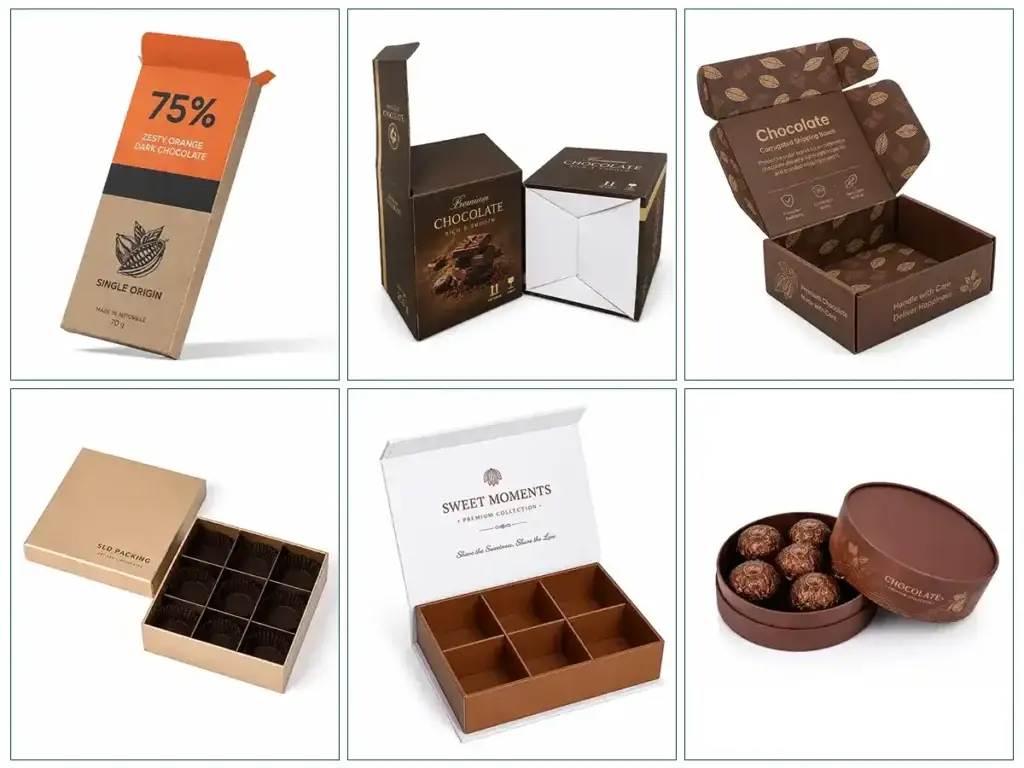
2. Main Types of Chocolate Paper Boxes
Folding Paper box
Folding cartons are made from lightweight paperboard that is printed, die-cut, creased and glued before being shipped flat.
They are commonly used for chocolate bars, tablets, small assortments and everyday retail products. They offer good print quality, efficient storage and relatively economical bulk production.
A folding carton may need an insert or stronger board when it holds heavier products or multiple chocolates.
See our custom chocolate folding boxes for tuck-end, hinged-lid, drawer, window and compartment structures.
Chocolate Bar Boxes and Sleeves
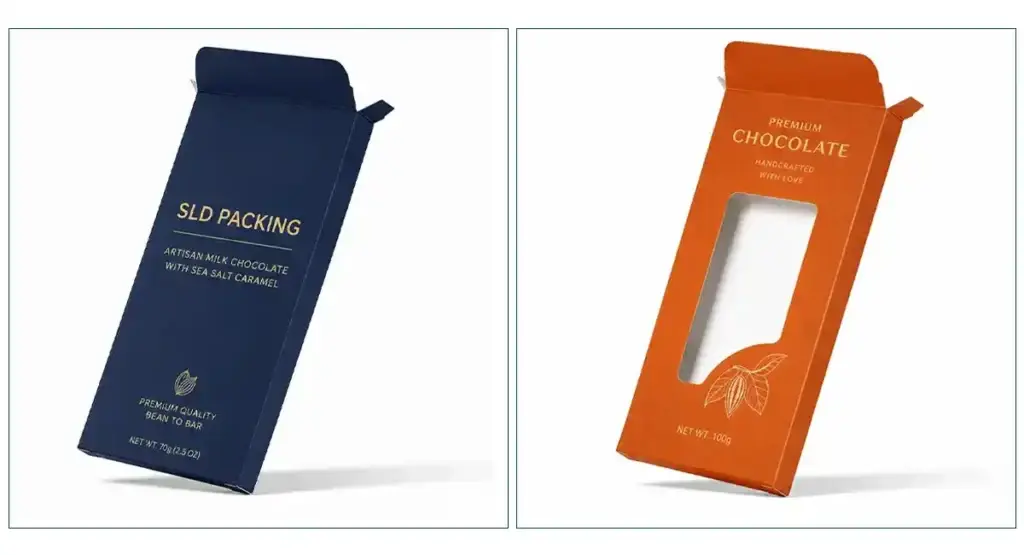
A chocolate bar box fully encloses a wrapped bar, while a paper sleeve usually slides over an existing wrapper, tray or inner pack.
Sleeves use less material and provide a large branding area, but they do not normally protect every side of the product. Full cartons offer better edge protection and more space for ingredients, flavor information and product instructions.
Explore custom chocolate bar boxes for single bars, tablets, multi-bar packs and seasonal editions.
Drawer Boxes
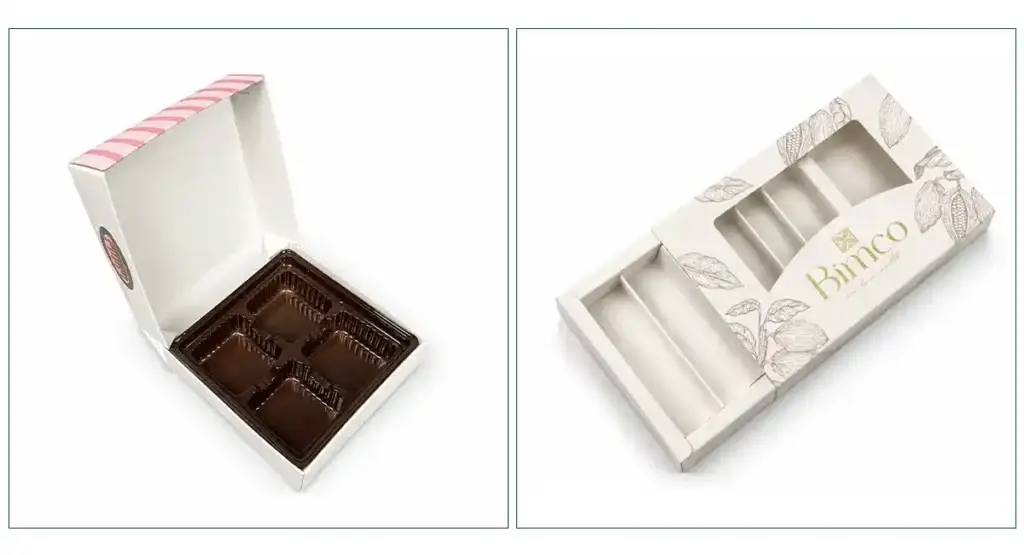
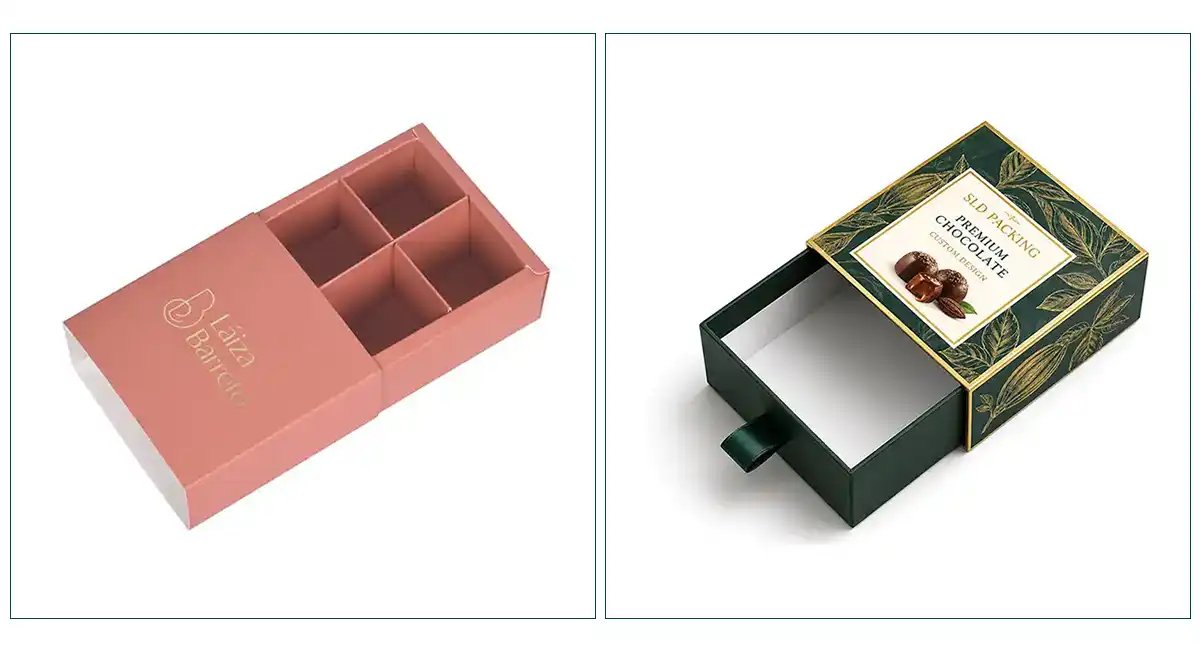
A drawer box has an inner tray that slides into an outer sleeve. It provides a more premium opening experience than a standard folding carton and works well for truffles, pralines, macarons and small gift collections.
Drawer boxes can be made as space-saving folding paperboard structures or as more substantial rigid chocolate gift boxes. The fit between the tray and sleeve must be carefully tested: too tight and the drawer becomes difficult to open; too loose and the box feels unstable.
Lid-and-Base Boxes
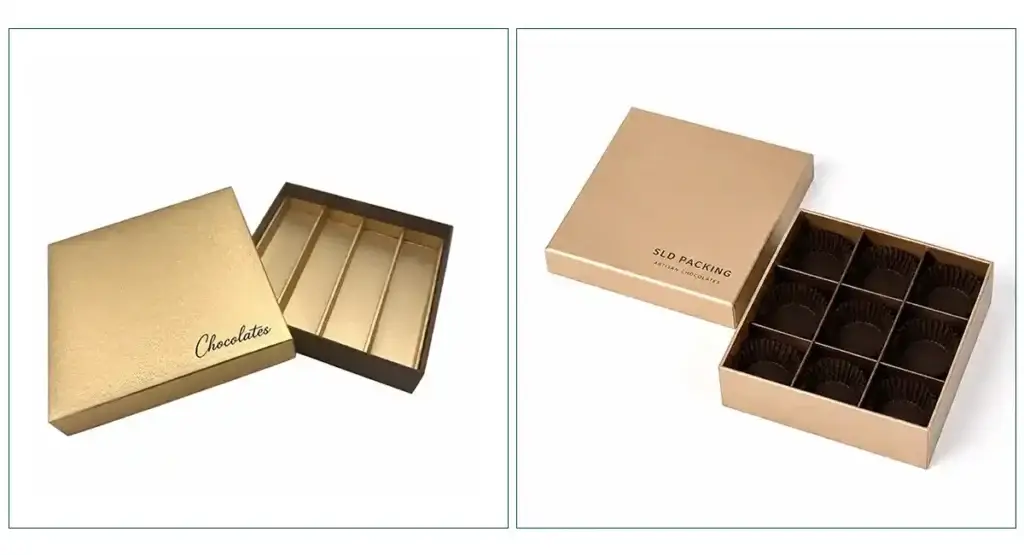
A lid-and-base box has a separate top and bottom. It can be produced as a foldable paperboard box or as a fully assembled rigid chocolate gift box.
The folding version saves storage and shipping space, making it suitable for brands that need efficient packing and transportation. The rigid version offers greater strength and a more substantial presentation but normally costs more to produce, store and transport.
Magnetic Closure Boxes
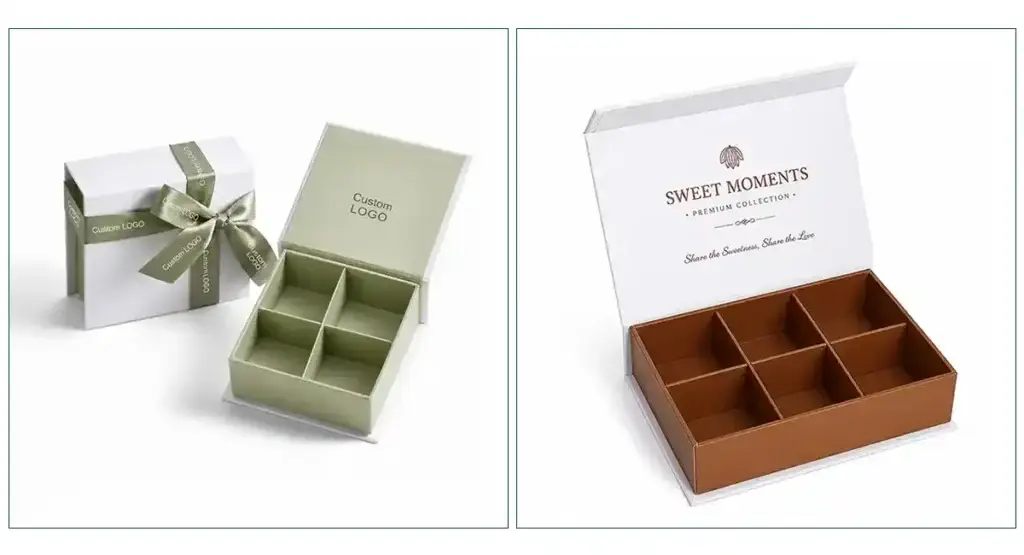
Magnetic boxes normally open like a book and are often used for luxury chocolate collections, corporate gifts and limited editions.
They provide a strong unboxing experience and space for printing inside the lid. However, magnets, wrapped board and additional components increase material use, assembly work and cost. They may also make material separation more difficult after use.
You can compare magnetic, drawer, lid-and-base, window and multi-tier structures on our custom chocolate gift boxes page.
Window Boxes
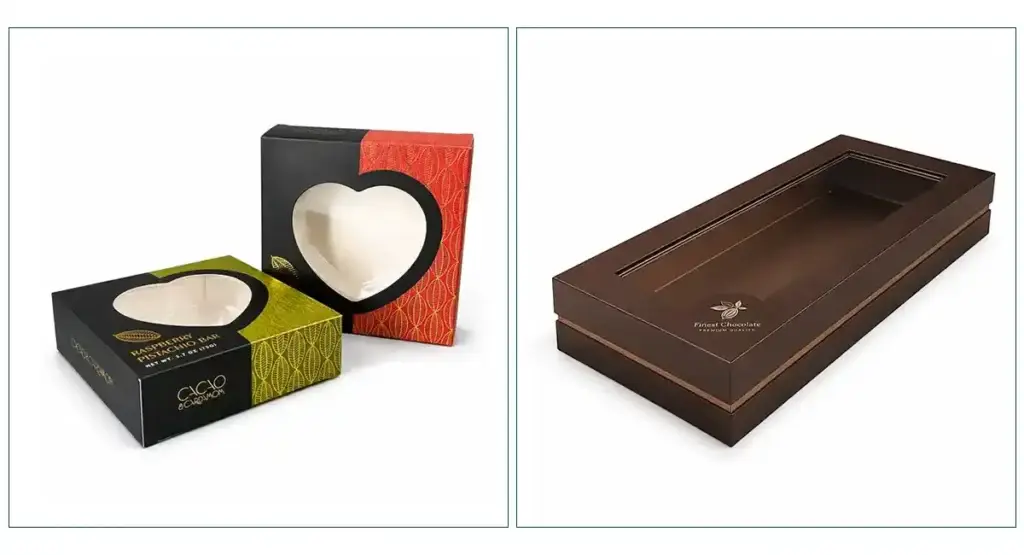
A window lets shoppers see the product or insert arrangement before opening the box. It can be useful for colorful pralines, decorated chocolates and retail assortments.
The window may use a transparent film behind the opening. This protects the product but introduces another material, so recyclability should be assessed according to the complete box construction and the recycling system in the destination market.
For unwrapped products, an open die-cut hole should not replace a suitable protective food-contact layer.
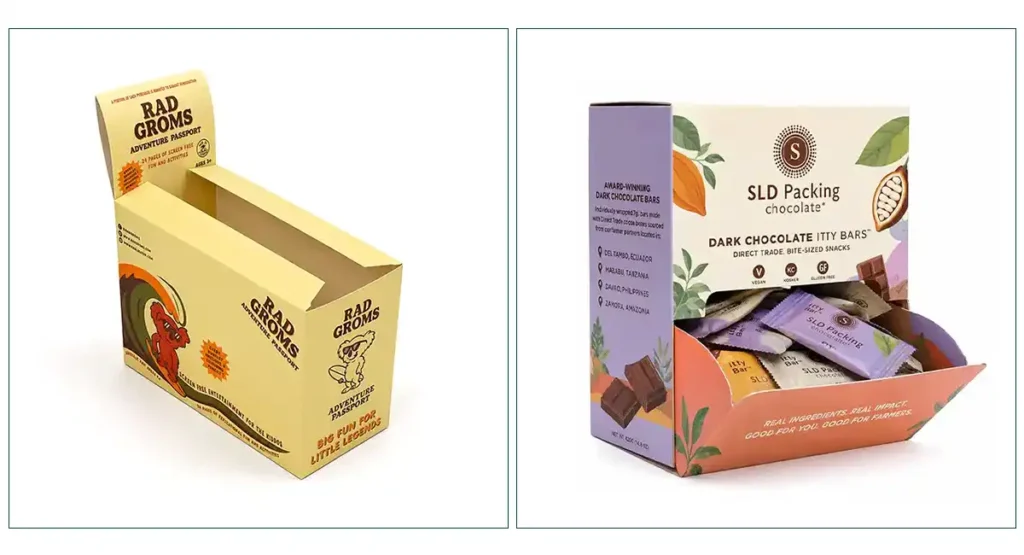
Chocolate Display Boxes
Display boxes are designed for counters, shelves and point-of-sale areas. They may hold individual bars, small packs, pouches or wrapped chocolates.
When designing a display box, confirm the number of products, total loaded weight, shelf dimensions, front visibility and how staff will replenish the display.
Explore custom chocolate display boxes for counter, header-card, divided, tear-away and shelf-ready formats.
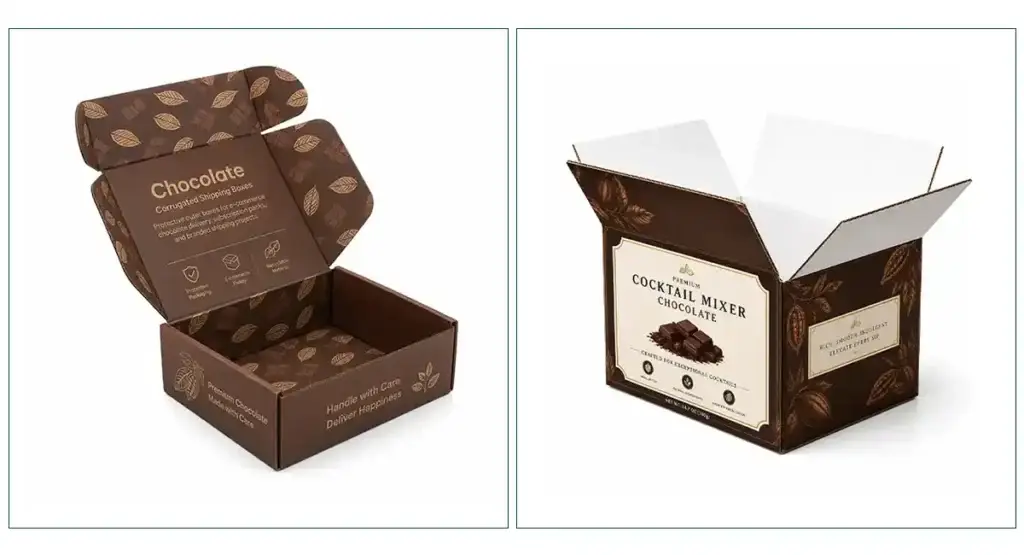
Corrugated Mailer and Shipping Boxes
Corrugated boxes provide more strength than standard folding cartons and are commonly used for e-commerce orders, subscription packs, retail distribution and gift delivery.
For online sales, it is often better to separate the two functions:
- The inner retail box provides presentation.
- The outer corrugated box provides transit protection.
A premium rigid gift box may still be damaged during courier handling when it is shipped without a suitable outer carton or cushioning.
Review our custom chocolate corrugated boxes for mailers, shipping cartons, tear-strip boxes and protective inserts.
Paper Tube and Special-Shaped Boxes
Round and oval paper tube boxes create a distinctive appearance for truffles, chocolate balls, cocoa products and limited-edition gifts.
They stand out visually but may use more storage and carton space than rectangular boxes. The lid fit, insert position and product-loading method should be tested carefully.
Explore custom chocolate paper tube boxes for round, oval, divided, ribbon-pull and window structures.
Special-shaped boxes, such as heart, hexagon or Advent calendar designs, can be effective for seasonal campaigns. They usually require more structural development, tooling, assembly and sampling than standard rectangular boxes.
SLD’s existing packaging range covers folding cartons, bar boxes, rigid gift boxes, displays, corrugated boxes and paper tube formats, allowing these structures to be compared within one packaging project.
3. Choosing the Right Paper Material
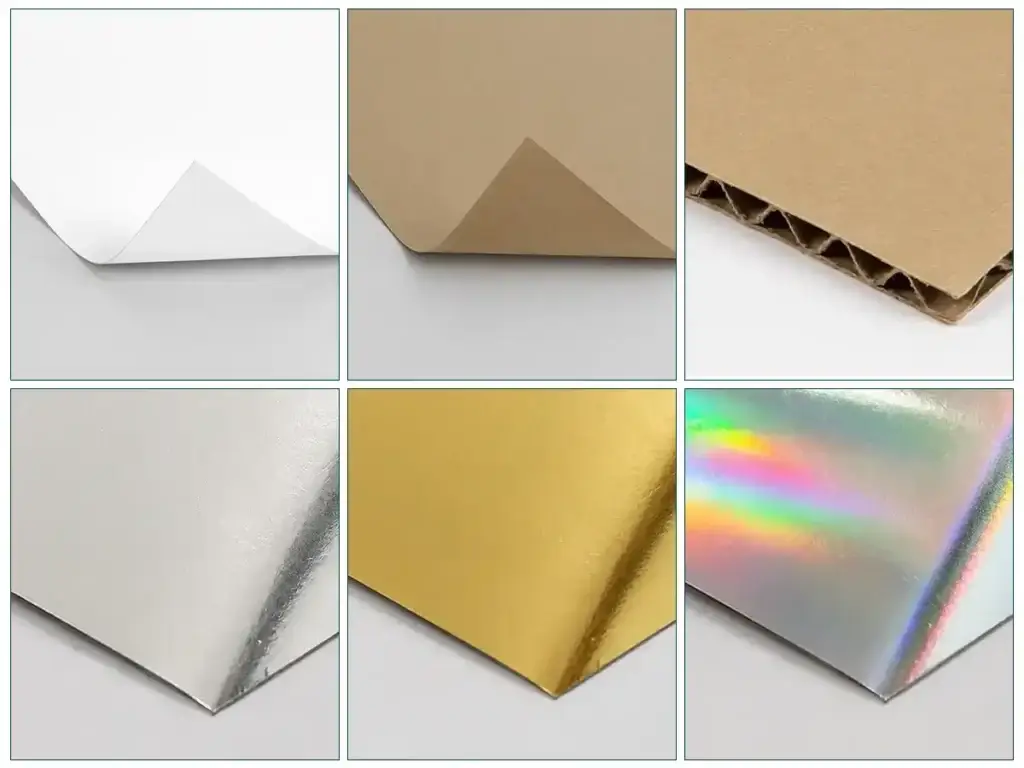
Material should be selected according to box size, product weight, print requirements, desired appearance and packing method.
White Paperboard
White paperboard, including SBS-style grades, provides a smooth printing surface and is widely used for folding cartons, sleeves and inserts.
A one-side-coated board is suitable when the outside requires high-quality printing. A two-side-coated board may be selected when the inside of the box also needs a clean printed appearance.
Kraft Paperboard
Natural brown kraft creates a simple, warm and less processed appearance. It is often used for artisan, organic-style or minimalist chocolate brands.
Printed colors may appear less bright on natural kraft than on white paperboard. White ink or a white underprint may be needed for certain designs.
Specialty and Textured Paper
Textured, soft-touch, metallic or colored papers are commonly used as decorative surfaces on premium gift boxes.
They can create a distinctive tactile effect, but material texture may affect fine printing, small text and color consistency. A physical material sample is more reliable than choosing from a screen image.
Greyboard for Rigid Boxes
Rigid gift boxes normally use thick greyboard as the structural core, wrapped with printed or specialty paper.
Greyboard provides strength and a substantial feel, but completed rigid boxes occupy more storage and shipping space than flat folding cartons.
Corrugated Board
Corrugated board contains a fluted middle layer that improves compression and impact resistance. It is used for mailers, shipping cartons and heavier display structures.
White-faced corrugated board supports cleaner branded printing, while natural kraft corrugated board provides a more functional appearance.
Do not choose material by thickness alone. Board grade, stiffness, grain direction, crease quality, box dimensions and structural design all affect performance. SLD’s current material range includes white paperboard, kraft grades, specialty papers, corrugated board and rigid greyboard.
4. Inserts and Inner Protection
A visually attractive box can still fail when the chocolates move, tilt or collide during transport.
The insert should be designed around the actual wrapped product—not only the dimensions of the unwrapped chocolate.
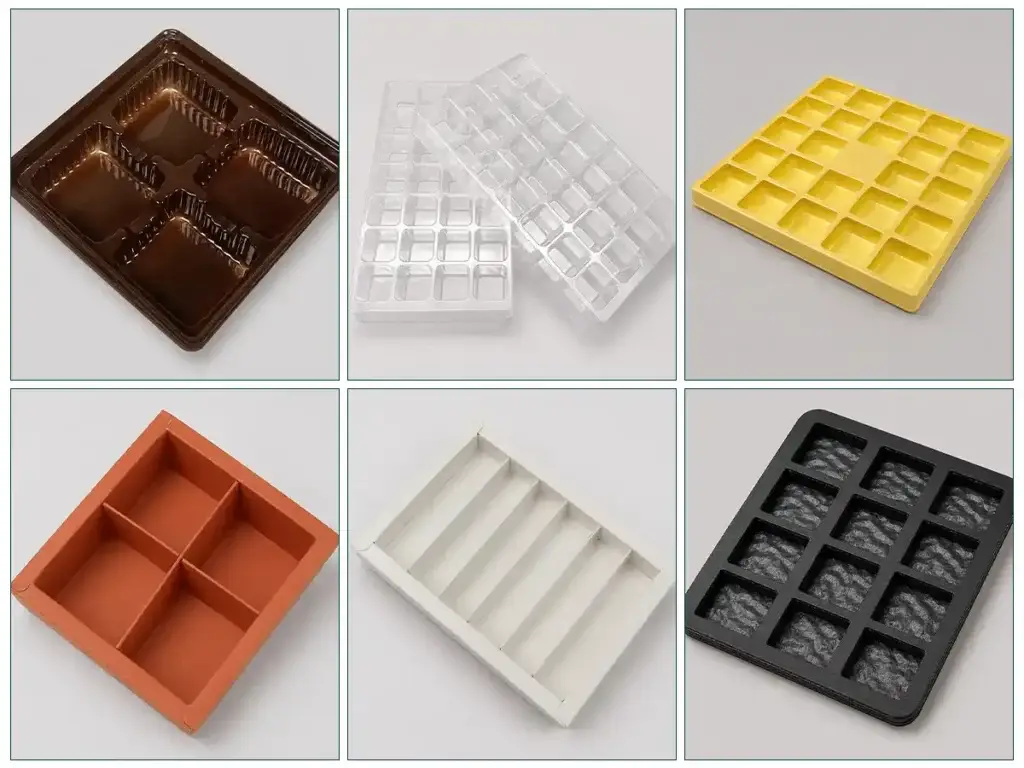
Paperboard Dividers
Paperboard dividers are suitable for creating rows or grids inside an assortment box. They can often be supplied flat and assembled during packing.
They are practical for wrapped chocolates and can be printed or color-matched to the box.
Folded Paper Inserts
Folded inserts use paperboard tabs, platforms and openings to hold products in position.
They can reduce plastic use and provide a coordinated paper-based presentation, but the structure must be tested for strength and loading speed.
Thermoformed Trays
A thermoformed tray can create accurately shaped cavities for individual chocolates. It offers consistent positioning and can make manual packing easier.
The tray material, cavity depth, finger access and food-contact documentation should be confirmed before production.
Pads and Cushioning Layers
Paper pads can separate chocolate layers, reduce light movement and improve the presentation underneath the product.
They are useful when a complete cavity tray is unnecessary. Finger notches, custom shapes, colors and printed patterns can be added to make the product easier to remove.
Greaseproof Paper and Paper Cups
Greaseproof paper, liners or individual cups help separate the chocolate from the decorative outer box and reduce visible grease marks.
The exact material should be selected according to whether it will have direct contact with the product.
Before approving an insert, test:
- Cavity size and product movement
- Space above the chocolate
- Finger access and product removal
- Loading speed during packing
- Insert stability when the box is tilted
- Compatibility with the primary wrapper
- Appearance after transport
SLD’s current capabilities include paperboard dividers, formed trays, plastic trays, cushioning inserts, box pads and greaseproof paper options.
5. Printing and Finishing Options
Printing should communicate the product clearly before decorative finishes are added.
CMYK and Spot-Color Printing
CMYK printing is suitable for photographs, illustrations and multi-color artwork. Spot colors, including Pantone references, may be used when brand-color consistency is especially important.
The final result can vary according to paper color, surface texture, coating and production method. Printed samples or approved color references should be used for critical brand colors.
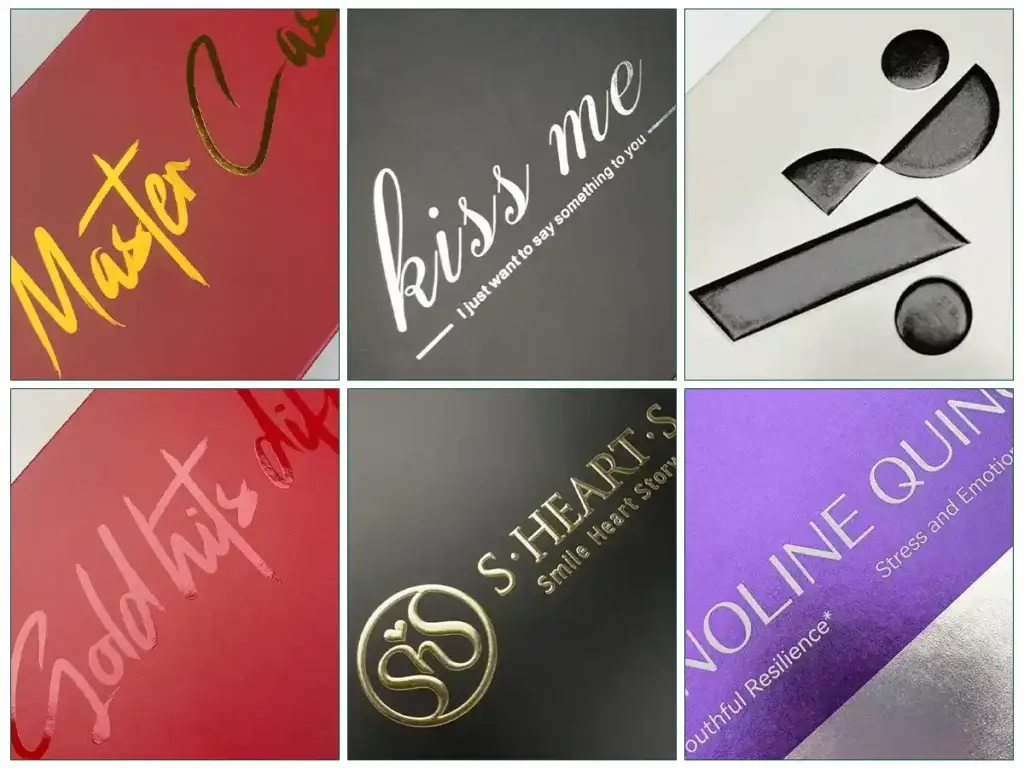
Foil Stamping
Gold, silver, holographic or colored foil can highlight a logo, border or seasonal detail.
Foil works best when it is used selectively. Covering very large areas may increase cost and make registration or surface consistency more difficult.
Embossing and Debossing
Embossing raises a design above the surface, while debossing presses it inward. Both add a tactile element without requiring additional printed colors.
Spot UV
Spot UV creates a glossy contrast on selected areas, usually over a matte surface. It is often used for logos, patterns or product names.
Lamination and Varnish
Lamination can improve surface protection and create matte, gloss, soft-touch or anti-scratch effects. Varnish offers a lighter surface coating and can retain more of the natural paper feel.
Because films, coatings, foil, windows, magnets and adhesives can affect material separation, a box should not be described as recyclable based only on the outer paper layer. Ask for the complete material construction and assess it according to the destination market.
See our chocolate packaging printing and finishing options for foil stamping, embossing, spot UV, lamination, varnish and die-cut windows.
6. How to Choose a Chocolate Paper Box in Five Steps
Step 1: Define the Packed Product
Record the dimensions and weight of the product after it has been wrapped or placed in its cup.
Also confirm:
- Number of chocolates per box
- Product arrangement
- Whether pieces are identical or mixed
- Whether the product is fragile or decorated
- Whether the box will have direct or indirect food contact
Step 2: Match the Structure to the Sales Channel
A lightweight retail carton, premium gift box and e-commerce mailer solve different problems.
Choose the structure according to where the customer will receive the product:
- Retail shelf
- Chocolate shop or café
- Corporate gifting
- Seasonal promotion
- E-commerce delivery
- Subscription box
- Wholesale distribution
Step 3: Develop the Size and Insert Together
The outer box and inner insert should not be designed separately.
Insert walls, folded tabs, paper thickness, finger spaces and lid clearance all affect the final internal dimensions. Starting from an assumed box size can lead to loose products, crushed decorations or an insert that does not fit.
Step 4: Approve Physical Samples
A white structural sample can confirm dimensions, opening, assembly and product fit before printing.
A printed sample can then confirm:
- Artwork position
- Brand colors
- Material appearance
- Foil and embossing registration
- Window position
- Insert color
- Overall opening experience
For e-commerce packaging, pack the real product and test the complete shipping configuration—not only the empty retail box.
Step 5: Confirm the Production Specification
Before bulk production, confirm the approved:
- Finished size
- Material grade
- Printing colors
- Surface finish
- Insert structure
- Artwork version
- Packing method
- Shipping carton
- Inspection requirements
A physical approved sample and written specification provide a clearer production reference than artwork alone. SLD’s existing process is structured around confirming product details, developing samples and using approved specifications to guide printing, finishing, die-cutting, inspection and packing.
7. What Affects the Cost of a Custom Chocolate Box?
The main cost factors are:
- Box size and material usage
- Folding or rigid construction
- Paper grade and thickness
- Number and type of inserts
- Printing coverage and number of colors
- Foil, embossing, UV, windows and lamination
- Custom tooling
- Order quantity
- Number of artwork versions or SKUs
- Manual assembly
- Flat-packed or fully assembled delivery
- Shipping volume and destination
A rigid box may have a higher unit cost and occupy more freight space, while a folding box may require additional assembly after delivery.
For this reason, compare the total landed and packing cost per saleable product, not only the factory unit price.
Practical ways to control cost include using a flat-packed structure, standardizing box sizes across several products, reducing unnecessary finishes and limiting the number of low-volume artwork versions.
8. Information to Send Your Packaging Supplier
Providing the following information will make recommendations and quotations more accurate:
- Chocolate type and product photographs
- Wrapped product dimensions and weight
- Number of pieces per box
- Preferred arrangement or insert layout
- Direct or indirect food-contact requirements
- Target market and sales channel
- Preferred box style and material
- Printing and finishing requirements
- Order quantity for each design
- Delivery destination and required date
- Existing artwork or brand guidelines
- Sample requirements
Exact specifications are not always necessary at the beginning. A clear product photo, wrapped dimensions, target quantity and intended use are enough to start evaluating suitable structures.
Frequently Asked Questions
What is the best paper box for chocolate?
There is no single best structure. Folding cartons are usually practical for chocolate bars and everyday retail products. Drawer or lid-and-base boxes work well for assortments, while rigid boxes are more suitable for premium gifts.
Can unwrapped chocolate touch the paper box directly?
Only when the complete material system has been selected and documented for the intended direct-contact use. Otherwise, use a suitable primary wrapper, cup, liner or tray between the chocolate and the decorative outer box.
Is a rigid box better than a folding box?
A rigid box normally provides a stronger structure and more premium presentation. A folding box usually costs less, ships flat and uses less storage space. The better choice depends on product value, order quantity, packing labor and sales channel.
Should a chocolate box have a window?
A window is useful when seeing the product helps the customer make a purchase. It may be unnecessary when the packaging relies on surprise, premium unboxing or strong product photography. Window film also adds another material to the box construction.
Are paper chocolate boxes recyclable?
Some are, but “paper-based” does not automatically mean the complete package is recyclable. Laminations, windows, magnets, metallic films, adhesives and mixed-material inserts may affect local recycling. Review the full material specification rather than only the outer paper.
Can a paper box prevent chocolate from melting?
No. A paper box can reduce physical damage, but it does not provide reliable temperature control. Warm-weather delivery may require insulated shipping, cooling materials, faster transit or seasonal shipping restrictions.
How can I reduce packaging cost without making the box look cheap?
Use a well-proportioned folding structure, reduce oversized empty space, standardize dimensions, use one focused finish instead of several, and invest in clean artwork and accurate color rather than unnecessary decoration.
Final Recommendation
The right chocolate paper box packaging should balance four things:
Product fit, protection, production efficiency and presentation.
Start with the real wrapped chocolate and the way it will be sold. Then select the box structure, material and insert. Approve the physical fit before investing in complex printing or finishing.
For a practical packaging recommendation, send your product photographs, wrapped dimensions, pieces per box, target quantity, market and delivery destination.
Explore our custom chocolate packaging solutions or contact the SLD Packaging team to discuss your project.
SLD Packing is a Shenzhen-based custom paper packaging manufacturer that has supported chocolate brands, confectionery businesses, retailers and gift projects since 2010, covering structure development, materials, sampling, printing, finishing and bulk production.