
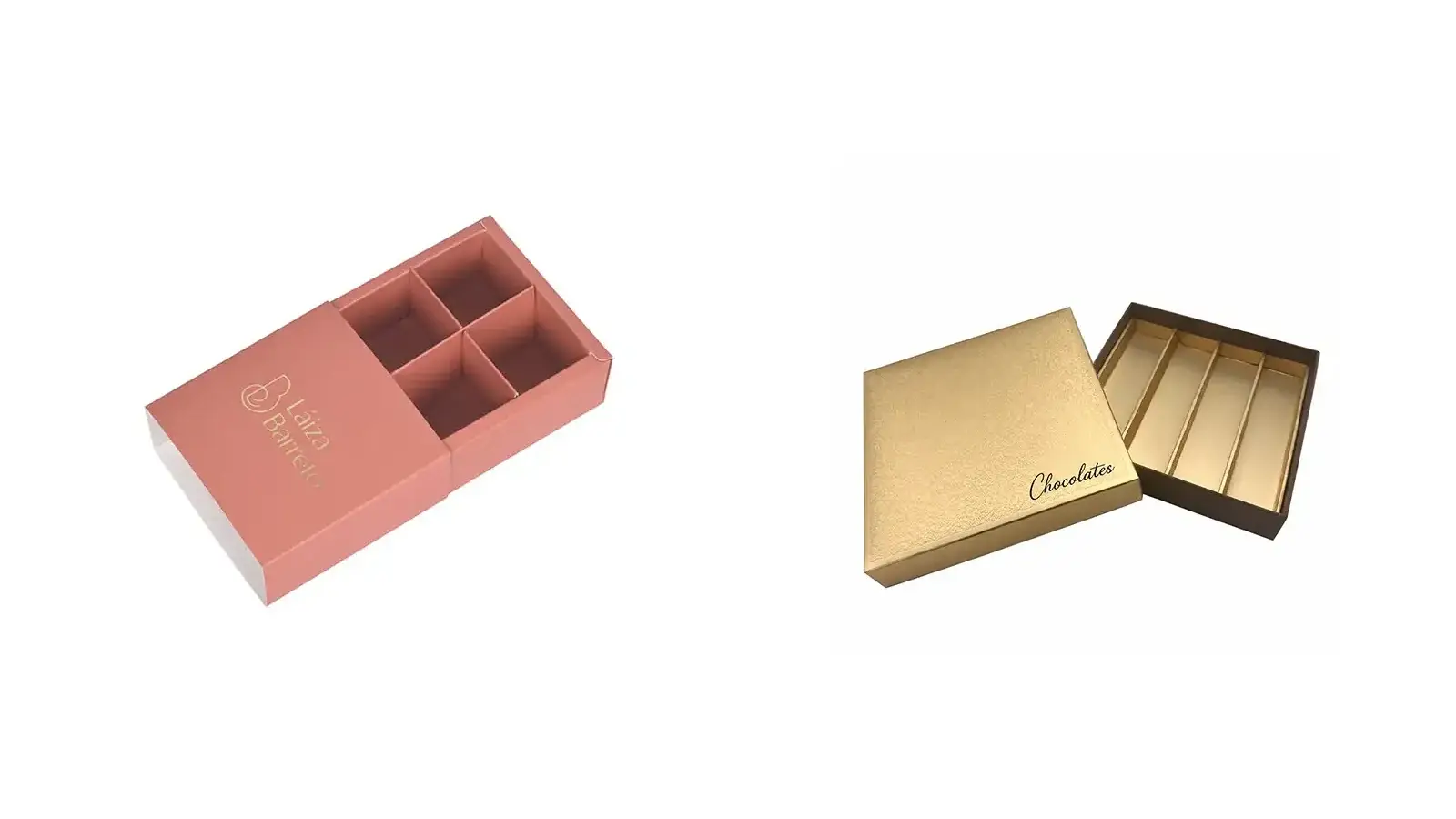
A chocolate shop serving both everyday customers and gift buyers has a good reason to consider a small range of folding boxes alongside a defined gift-box offer. The everyday pack gives a customer a way to buy a few favorites at a suitable total price. The gift offer gives another customer a presentation they are happy to hand to someone else.
Your packaging mix should follow those purchases. Decide which occasions you serve, which assortments you sell and how your team packs them. Then choose the structures and quantities.
Look at the range as a customer sees it
The counter reference below shows several chocolate assortment sizes, open display samples and related printed artwork. It offers a useful starting point for planning how customers will compare your range. Think about what they can see immediately, including the quantity, the arrangement of the chocolates and the presentation of the finished pack.
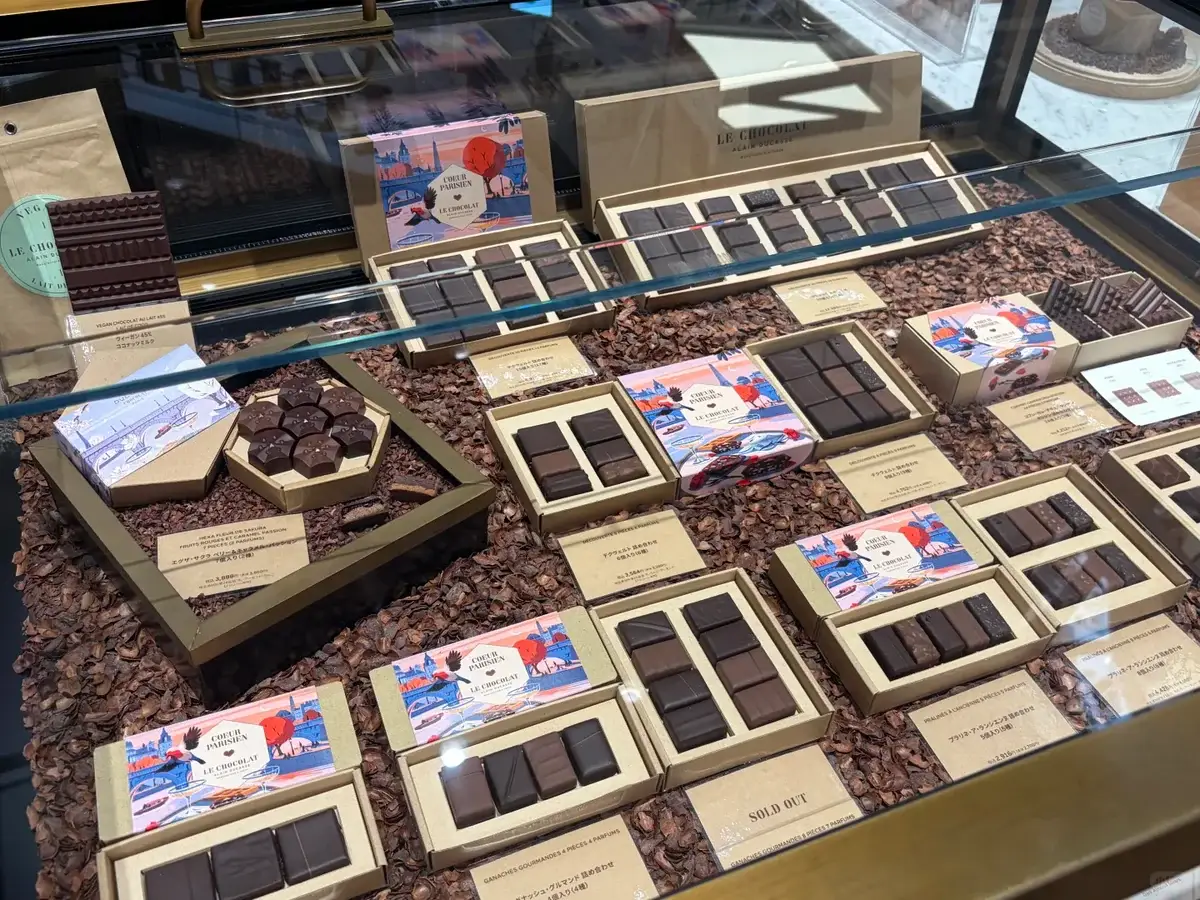
Review your proposed take-home packs and gift presentations together. Make the difference in contents and price easy to understand, and carry a consistent brand appearance across them. Confirm the construction and cost with packaging samples, then use your store's sales and packing records to decide how many of each to order.
Give each packaging option a job
Start with what the customer is buying for. A regular buying six chocolates for home may want a compact pack that keeps the pieces neatly arranged. Someone visiting friends may want an attractive box and a message card. A company ordering client gifts may specify a more substantial box, coordinated branding and a fixed delivery date.
Gift packaging can use a folding construction. A printed folding carton with a well-fitted insert can make a considered gift. A rigid gift box adds a formed board structure and a particular opening experience. In this guide, the choice is how much of each construction your shop needs.
For detailed material, assembly and same-assortment comparisons, use our folding cartons versus rigid chocolate boxes guide.
| Purchase occasion | Packaging to consider | What the owner should check |
|---|---|---|
| A few favorites to eat at home | A compact folding box in a regularly replenished size | Total selling price, fit for the selected pieces and packing speed. |
| A small thank-you or visit to friends | A finished folding box with an optional card, sleeve or ribbon | Whether the presentation feels complete at the intended gift budget. |
| An assortment bought for its presentation | A rigid lid-and-base, drawer or magnetic gift box | Opening action, filled appearance, cost and storage volume. |
| A corporate or seasonal order | A repeatable folding or rigid presentation chosen for the brief | Quantity per version, packing capacity, artwork approval and delivery schedule. |
Build the everyday range around repeatable purchases
A folding box is a useful starting point for a regularly replenished assortment. Flat-packed delivery can reduce the space occupied by empty boxes, and the structure can support printed branding, windows and finishes. Confirm the supply form and the folding work your team will perform. See examples in our chocolate folding box range.
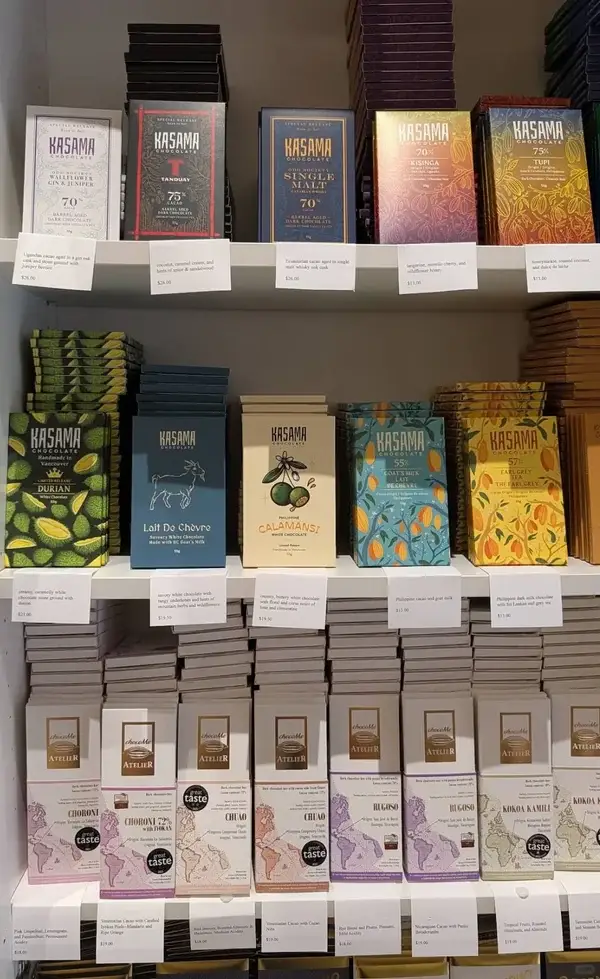
Keep the initial range small enough to replenish and recognize easily behind the counter. One small take-home size and one sharing size may be enough to test demand. Choose piece counts around the chocolates and layouts you actually sell. Have staff check the fit of the largest pieces, cups and wrappers before treating a size as standard.
Make the everyday range look like part of your brand. Consistent colors, clean folds and a well-presented assortment help a simple box feel intentional. A seasonal card or removable sleeve can add an occasion-specific message to a year-round pack.
An all-rigid range can raise the cost and total price of the smallest purchase. If customers frequently ask for a few pieces or a simpler pack, that is a reason to trial a folding option. A shop built around premium gifting may see a different pattern. Record the requests and completed purchases in your own store.
Make the gift option worth choosing
A rigid gift box earns its place when the customer values the formed presentation, the opening action or the way the chocolates are arranged. Select a small number of formats that suit your gift customers. SLD Packaging's chocolate gift box range includes lid-and-base, drawer and magnetic options.
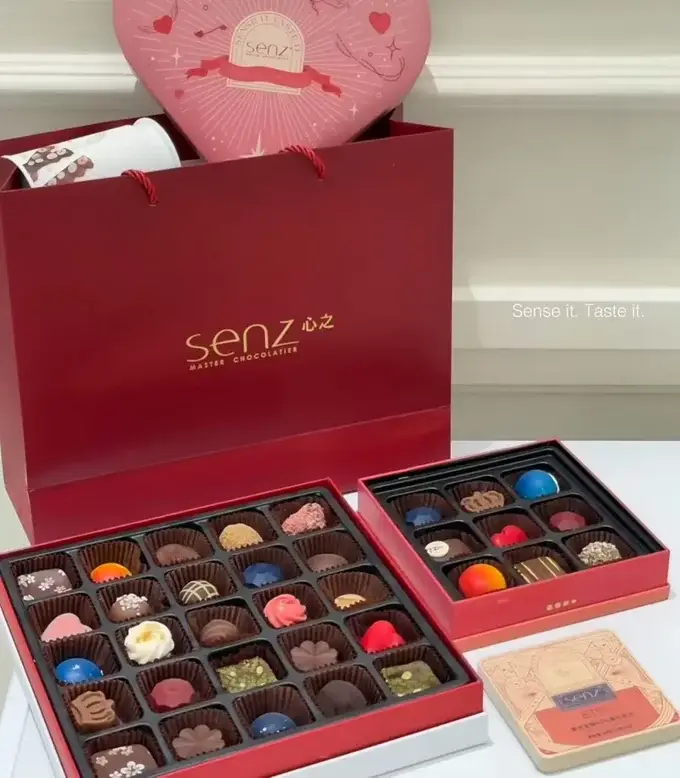
You can offer two presentations for the same chocolate assortment. For example, a shop might test a 12-piece folding box and a 12-piece rigid gift box, making the contents and price of each clear. This is a planning example. Develop and sample the insert for each structure, since the available internal space may differ.
The gift price needs to cover the additional packaging and handling. Compare the extra revenue after discounts and applicable sales tax with the extra materials and labor required. Include the bag, card, ribbon and any finishing steps in that calculation. Review it again when gift buyers choose a different piece count or chocolate selection.
Rigid boxes can also support large orders. Corporate gifting or a gift-led store may generate substantial demand for them. Allocate stock according to confirmed orders and observed sales, with a replenishment allowance suited to your supplier's lead time.
Check the work behind the counter
Flat-packed boxes require folding skill and time. A structure with several corner locks, a separate lid and a divided insert can take practice to assemble neatly. Train the people who will use it, then time a repeat batch from the delivered packaging to acceptable boxes ready for filling.
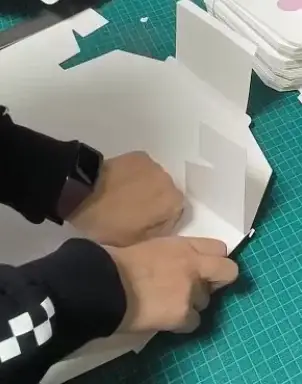
Count the whole packing sequence for both options. Include erecting the box, fitting the insert, choosing and loading chocolates, placing a pad or card, closing, tying and bagging. Record correction time and spoiled packaging. A preformed rigid box with a ribbon can still require several finishing steps.
For a busy period, prepare a measured buffer of empty folding boxes if space permits. Keep them clean and protected, and base the quantity on how quickly the counter uses them. Time the process during a busy period as well as during quiet preparation.
Choose quantities from a short store trial
Trial the range over ordinary trading days and at least one relevant busy period. Keep everyday and occasion-led results separate so a holiday spike is visible. The following record can guide the next packaging order.
| Record for each pack size and presentation | How it helps the next decision |
|---|---|
| Units sold and the customer's stated occasion, when known | Shows which purchase each format serves. |
| Requests for smaller quantities or a different presentation | Identifies a possible gap to test. |
| Selling price, chocolate cost and total packing cost per filled set | Helps compare the contribution from each offer. |
| Preparation and counter-packing time | Shows whether staff can keep up during peak demand. |
| Damaged, spoiled and unused packaging | Makes waste and slow stock visible. |
| Stock on hand, confirmed orders and replenishment lead time | Helps set a reorder quantity and buffer for each format. |
Use that record to refine the number of sizes before adding more designs. A core box that sells throughout the year can be paired with seasonal accessories. For dated or corporate artwork, confirm whether the supplier's minimum quantity applies to each size, design or print version, and plan how any remaining stock will be used.
If the shop also ships orders, review the filled retail box within the complete delivery pack. Include the outer protection and any temperature-management arrangement required for the route when costing and trialing that offer.
Prepare one brief for the whole range
Share your main piece counts, chocolate dimensions after cups or wrapping, desired selling-price positions and expected quantities for each presentation. Add your back-room storage limit, the packing work staff can perform and the intended launch date. Bring the proposed samples to the counter and try the complete filling and handover process.
Send SLD Packaging your shop's assortment and packing requirements to discuss folding-box and gift-box options together. Include the everyday and gift quantities separately so we can review the structures, inserts and delivery forms for each.